Ten Essex Grammar Schools Share One CSSE Test: Local Shortlist & Prep
Ten Essex Grammar Schools Share One CSSE Test: Local Shortlist & Prep
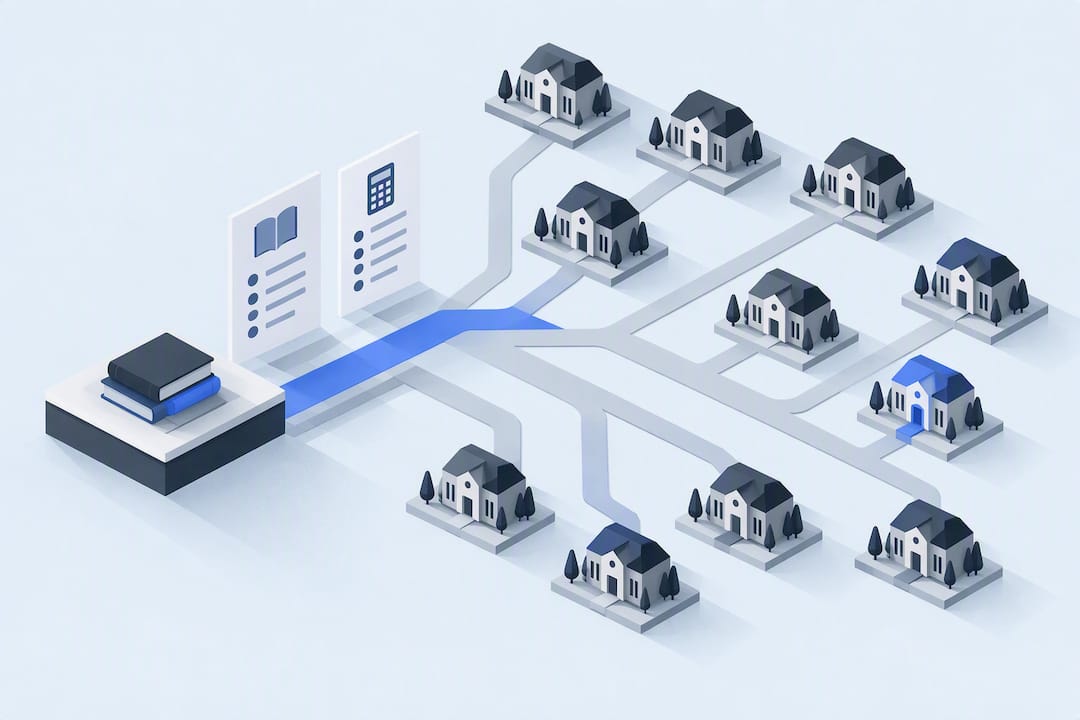
Essex has several grammar schools, with most sitting inside the Consortium of Selective Schools in Essex (CSSE) and sharing one 11+ test. The exception is Chelmsford County High School for Girls, which sets its own independent paper. Most families split their shortlist across the Chelmsford/Colchester cluster and the Southend/Westcliff cluster. Register for the CSSE test if any of your preferred schools use it, and register separately and earlier for CCHS if it’s on your list.
TL;DR:
- Most Essex grammar schools, including Colchester Royal Grammar and King Edward VI Chelmsford, use the CSSE 11+ test for admission, except Chelmsford County High for Girls, which runs its own exam.
- Priority-area residence can significantly influence admission chances, often outweighing exam scores, especially in schools like Colchester County High School for Girls.
- Registering for the CSSE test and any independent exams like CCHS requires careful planning, with separate forms, fees, and deadlines, making early preparation essential.
- Preparing with CSSE-specific practice questions and timed mock exams is more effective than generic workbooks, and progress tracking helps focus revision on weak areas.
- Unsuccessful applications can often be challenged through appeals or waitlists, and alternative schools with different admission criteria can provide strong educational options.
Table of Contents
- How many Essex grammar schools are there, and which use CSSE?
- How does CSSE selection actually decide who gets a place?
- Registration checklist: forms, dates and test day
- Quick snapshots of the local selective schools
- Building a preparation plan that actually works
- What do published admission numbers tell you about competition?
- What happens if your child isn’t offered a place?
- Catchment area versus sibling priority: which matters more?
- Curriculum focus and extracurricular strengths worth comparing
- Preparation resources and tutoring worth considering
- What Essex parents get wrong
- How Essex11mathspractice fits your CSSE preparation
- Where to check the official details
- Sources
- FAQ
How many Essex grammar schools are there, and which use CSSE?
Ten of Essex’s 11 grammar schools test under the CSSE consortium, sitting the same English and maths papers on the same day. That includes both Southend schools, both Westcliff schools, and Colchester Royal Grammar School alongside Colchester County High School for Girls. King Edward VI Grammar School in Chelmsford is also a CSSE member.
Chelmsford County High School for Girls is the odd one out, running its own independent admissions test outside the consortium. A child applying there needs a separate registration, a separate fee, and often a different preparation timetable, since the paper style doesn’t mirror the CSSE format.
Beyond the 11 true grammar schools, Essex has several selective or partly selective secondaries that families often shortlist alongside them: Westcliff High School for Boys (WHSB), Westcliff High School for Girls, Southend High School for Boys, Southend High School for Girls, St Thomas More High School, St Bernard’s High School in Westcliff-on-Sea, Shoeburyness High School, and The King John School.
- CSSE cluster (Chelmsford/Colchester): Colchester Royal Grammar School, Colchester County High School for Girls, King Edward VI Grammar School.
- CSSE cluster (Southend/Westcliff): Westcliff High School for Boys, Westcliff High School for Girls, Southend High School for Boys, Southend High School for Girls, Shoeburyness High School.
- Independent test: Chelmsford County High School for Girls.
- Additional selective or faith routes locally: St Thomas More High School, St Bernard’s High School, The King John School (partly selective).
The Southend/Westcliff cluster sits close enough together that many families can realistically list four or five schools without a long commute. The Chelmsford/Colchester cluster is more spread out, so travel time often decides preference order more than exam performance does. Chelmsford County High School for Girls and St Thomas More High School both need supplementary or separate registration on top of the standard CSSE form, so check each prospectus before assuming one application covers everything.
How does CSSE selection actually decide who gets a place?
The CSSE 11+ exam consists of two tests, English and mathematics, sat on the same day at a local test centre. CSSE publishes free familiarisation papers so children know the question style before the real thing, and the test measures core reading, writing, and numerical reasoning skills rather than obscure trivia.
Raw scores get standardised against age, so a child born in August isn’t disadvantaged against one born in September. The consortium then ranks every candidate by their combined standardised score. Schools set their own qualifying floor, and a child who clears that floor doesn’t automatically get a place. They get ranked against everyone else who named that school as a preference.
The order oversubscription criteria typically follow:
- Children with an Education, Health and Care Plan naming the school
- Looked-after children and previously looked-after children
- Siblings already attending the school
- Priority-area residence, sometimes defined by a fixed radius
- Remaining places allocated by CSSE score rank
Priority-area rules matter more than most parents expect. Some schools apply a defined radius, reportedly around 25 miles for certain Essex grammar schools, before falling back purely on score. A child living just outside that boundary with a strong score can still miss out to a lower-scoring child living inside it.
Chelmsford County High School for Girls doesn’t follow any of this. Its independent test has its own timetable, its own marking, and its own deadline, entirely separate from the CSSE process. A child can sit both, but only with careful diary management.
Registration checklist: forms, dates and test day
Getting the paperwork right matters as much as the revision. Missing a deadline by a day can rule a child out of a school regardless of ability.
- Register for CSSE through the CSSE Information Guide as soon as registration opens, typically in the spring before Year 6.
- Register separately for CCHS if it’s on your list, since its independent test runs to its own timetable.
- Complete your home local authority’s Common Application Form (CAF) for the general secondary transfer process.
- Submit any school-specific Supplementary Information Forms (SIF), required by schools like St Thomas More High School and Chelmsford County High School for Girls.
- Confirm access arrangements early if your child needs extra time or a different test setting, since evidence requirements take time to gather.
On test day, bring the test centre’s admission letter and photo ID where requested. Arrive with time to spare. Results and offers follow the national secondary offer timeline in March.
Pro Tip: Photocopy every form before you submit it, and keep a simple spreadsheet of deadlines for each school. CSSE registration, CCHS registration, your CAF, and any SIFs all run on different clocks, and it’s the second or third form parents forget, not the first.
Quick snapshots of the local selective schools
Each of these deserves a look at its own prospectus before you finalise preferences. Published cut-offs shift year to year, and a school’s own admissions page is the only reliable source for the current year’s figures.
- Westcliff High School for Boys (WHSB): Selective boys’ grammar with an established academic ethos and a wide extracurricular programme, from CSSE ranking.
- Westcliff High School for Girls: Academy grammar rated Ofsted outstanding, with a strong EBacc-focused curriculum and consistently high outcomes.
- Southend High School for Boys: Selective grammar recognised for pastoral care, including autism-inclusive practice, alongside strong academic results.
- Southend High School for Girls: Ofsted outstanding grammar with a track record in leadership development and performance opportunities.
- Colchester County High School for Girls: Publishes 192 Year 7 places for 2027 entry and its own priority-area cut-offs, giving families a rare degree of transparency.
- St Thomas More High School: Catholic boys’ secondary with a distinctive faith-based pastoral model, requiring its own supplementary form.
- St Bernard’s High School, Westcliff-on-Sea: Girls’ school with an established sixth form, useful for families wanting continuity beyond Year 11.
- Shoeburyness High School: Community-focused school with some CSSE places, a practical option for Shoeburyness families wanting to avoid a long commute.
- The King John School: Partly selective comprehensive built around family engagement and core values, worth considering as a broader-curriculum alternative.
Open days are where a prospectus turns into a real decision. A school that looks identical to its rivals on paper often feels completely different once you’ve walked the corridors and heard how staff talk about their pupils.
Building a preparation plan that actually works
A staged approach beats last-minute cramming every time. Start with familiarisation using CSSE’s own free papers so your child knows the format cold, then move into topic-by-topic maths practice closing specific gaps, and only introduce full timed mocks once the fundamentals are solid.
Authentic, exam-style questions with instant marking make this far more efficient than working through generic Key Stage 2 workbooks, because a child sees exactly where marks were lost and why, not just a final score. Worked solutions turn a wrong answer into a lesson rather than a dead end.
- Familiarise with the real format before drilling content.
- Practise maths topic-by-topic, tracking which areas are genuinely weak versus just rusty.
- Run timed mocks that replicate CSSE’s actual duration and pressure.
- Review every error properly rather than moving straight to the next paper.
Pro Tip: Balance matters. A child who’s brilliant at maths but rushes English under time pressure needs practice on pacing, not more maths questions. Essex11mathspractice’s CSSE-style maths practice is built around this exact staged approach, with instant marking against genuine exam-format questions.
What do published admission numbers tell you about competition?
Colchester County High School for Girls has published Year 7 places for 2027 entry and cut-off scores with a notable difference between children inside and outside its priority area, from 2025 entry data. That gap between the two cut-offs is the clearest public evidence of how much priority-area residence shifts the bar.
Most other Essex grammar schools don’t publish their admission numbers or cut-offs as openly, which makes Colchester’s figures useful as a benchmark rather than a universal rule. A school’s minimum qualifying score can vary meaningfully from year to year depending on how many children register and how strong that particular cohort is.
Rather than fixating on last year’s exact number, treat published cut-offs as a rough guide to competitiveness, not a target to hit precisely. A score just above one year’s cut-off could sit below the next year’s, particularly at popular Southend and Westcliff schools where demand tends to be consistently high. The safest approach is to prepare your child to score comfortably above any published floor, not exactly at it, and to apply to a realistic spread of schools rather than banking everything on a single first choice.
What happens if your child isn’t offered a place?
An unsuccessful CSSE application isn’t necessarily final. Every Essex grammar school operates an independent appeals process, and parents have the right to appeal a refused place through an independent appeal panel, separate from the school itself.
Appeals typically focus on whether the admissions policy was applied correctly and fairly to your child’s specific case, not on whether you feel your child deserves a place based on ability alone. A strong appeal usually presents a specific procedural or circumstantial argument, perhaps around how a priority-area boundary was interpreted, or evidence that wasn’t properly considered first time round.
Waiting lists run alongside appeals and can move surprisingly quickly through the summer term, as families who hold multiple offers make their final decisions. It’s worth staying on a waiting list even while pursuing an appeal, since a place through the list arrives without any of the appeal process’s uncertainty.
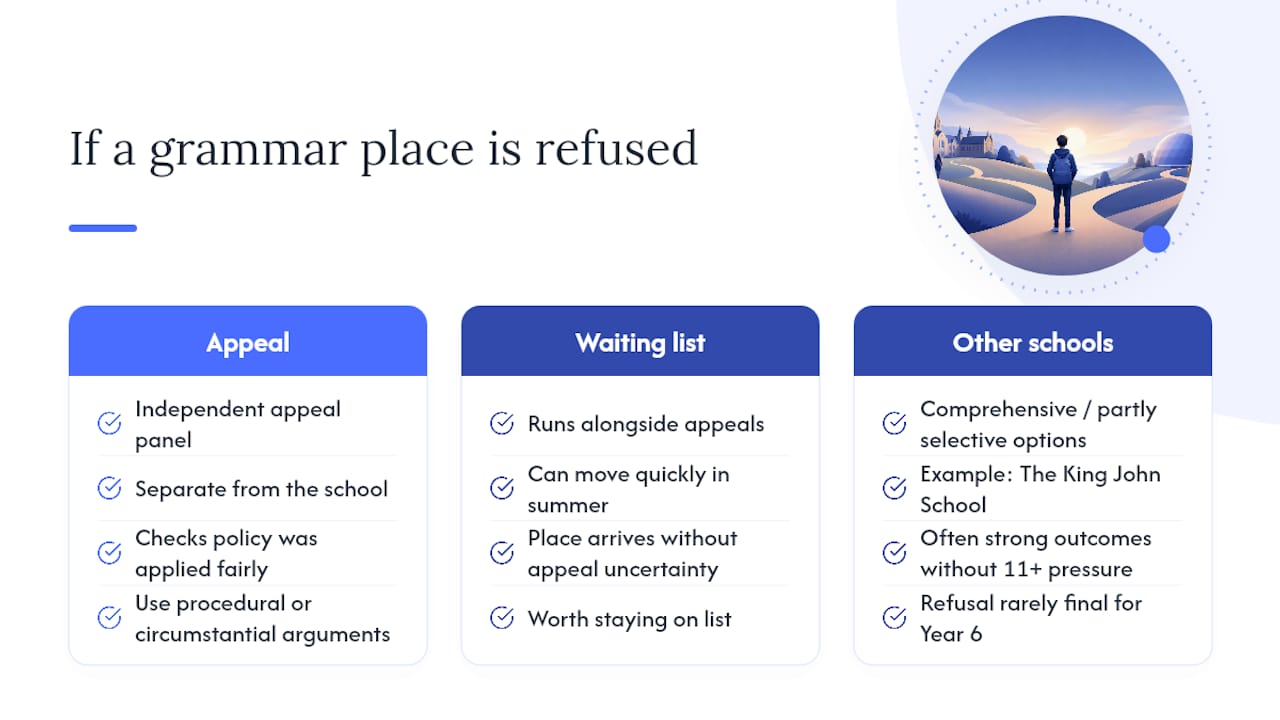
If your child misses out everywhere, remember that Essex’s comprehensive and partly selective schools, including options like The King John School, often offer strong outcomes without the pressure of the 11+ route. A refused grammar place in Year 6 is rarely the last word on a child’s secondary education.
Catchment area versus sibling priority: which matters more?
Sibling priority almost always outranks catchment or priority-area residence in Essex admissions policies. If your older child already attends a particular grammar school, a younger sibling typically gets considered before general priority-area or CSSE-score ranking kicks in, provided they clear the school’s qualifying score.
Priority-area residence works differently. It’s usually a geographic radius or defined zone, and it only becomes decisive once you’re competing against other children with a similar CSSE score. Colchester County High School for Girls illustrates this well: its inside-priority-area cut-off sits well below its outside-priority-area cut-off, meaning two children with identical scores could get entirely different outcomes purely based on postcode.
For families without a sibling already at their target school, geography becomes the single biggest lever they can pull, short of the exam score itself. Moving house to shift into a priority area is a drastic step few families take purely for grammar school access, but understanding exactly where a boundary falls, and how firmly a school applies it, can change how you rank your preferences. A school just outside easy reach might still be worth listing if your score is likely to be strong enough to overcome the outside-area cut-off.
Curriculum focus and extracurricular strengths worth comparing
Essex grammar schools share a broadly academic curriculum, but their emphasis differs enough to matter for a child’s fit. Westcliff High School for Girls leans heavily EBacc-focused, pushing traditional academic subjects hard from the outset, while Southend High School for Boys has built a reputation around pastoral support alongside academics, including recognised inclusive practice for pupils with additional needs.
Extracurricular strength varies just as much. Westcliff High School for Boys is known for a particularly wide enrichment offer spanning sport, music, and enrichment clubs, useful for a child who thrives outside the classroom as much as within it. St Bernard’s High School’s established sixth form gives girls a clear run through to A-levels without needing to apply elsewhere at 16, which some families value for continuity alone.
Faith-based provision sets St Thomas More High School apart from the purely academic grammars. Its Catholic ethos shapes daily school life beyond the timetable, appealing to families for whom that identity matters as much as exam results.
None of this shows up in a league table, which is exactly why open days matter. A child who’d thrive in a smaller, community-focused environment like Shoeburyness High School might struggle to stand out in a larger, intensely competitive grammar, regardless of how well they score on the day.
Preparation resources and tutoring worth considering
Most Essex families combine three types of preparation: free official material, paid practice platforms, and, for some, private tutoring. CSSE’s own familiarisation papers are the essential starting point, since they show the exact format your child will face, not an approximation of it.
Beyond that, dedicated CSSE-style practice platforms let a child work through hundreds of questions with instant feedback, which is difficult to replicate with printed workbooks alone. Private tutoring can help, particularly for a child who needs one-to-one explanation of a specific weak area, but it’s expensive and inconsistent in quality across Essex, with no formal accreditation system for 11+ tutors.

Group tuition classes offer a middle ground, cheaper than one-to-one but still providing structure and peer accountability. Whichever route you choose, the CSSE-specific format matters more than raw quantity of practice. A child who’s completed hundreds of generic Key Stage 2 questions but never sat a properly timed CSSE-style mock is often less prepared than one who’s done half the volume in the correct format.
What Essex parents get wrong
Open days beat league tables every time. Don’t over-drill one subject and miss a SIF deadline. Geography should shape your preference order as much as ability does.
How Essex11mathspractice fits your CSSE preparation
There are practice platforms offering maths questions designed to match the CSSE 11+ format, not adapted from broader Key Stage 2 material. These often provide instant marking and full worked solutions, so a wrong answer becomes an immediate lesson rather than a mystery to puzzle over later.
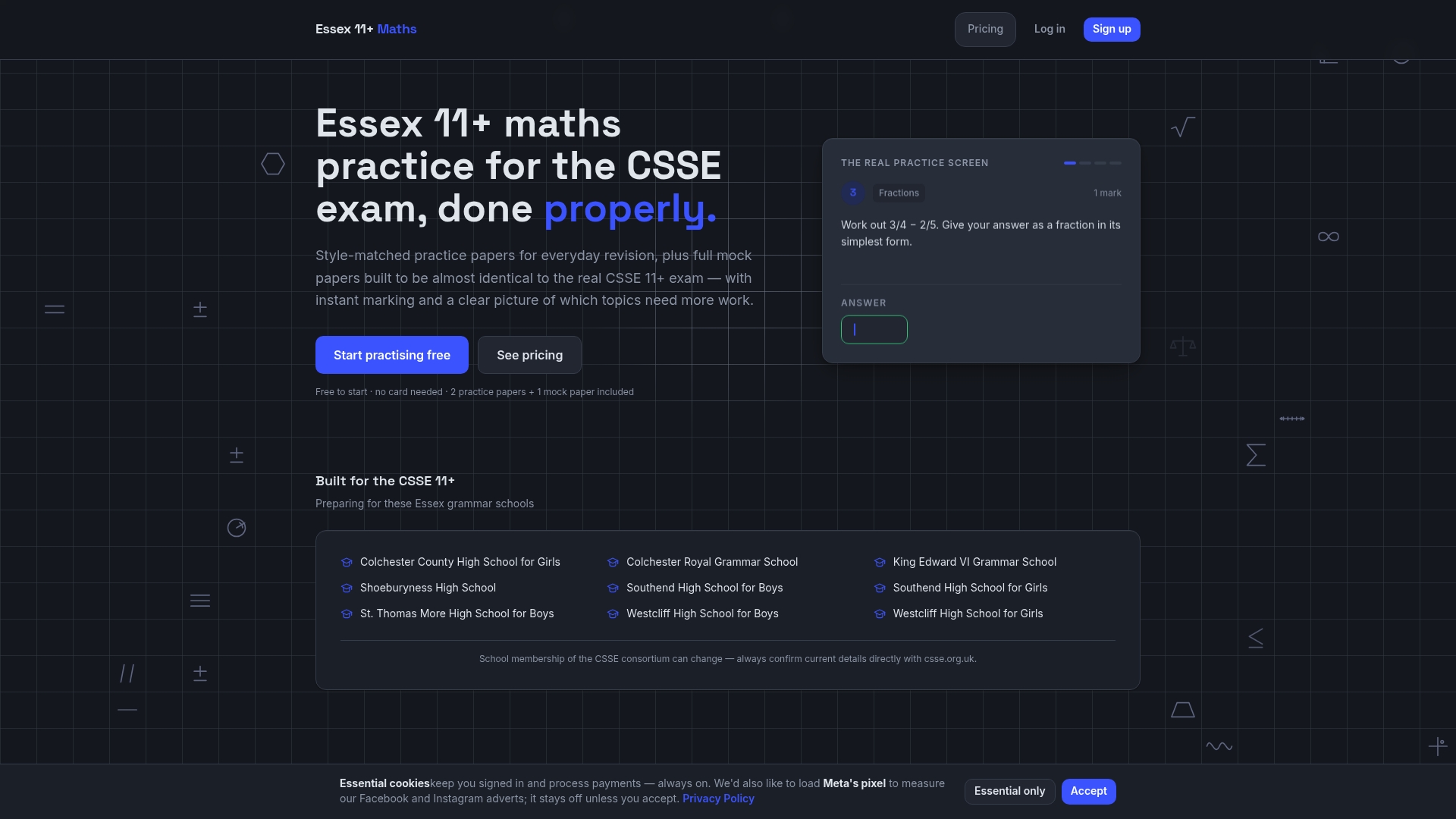
That matters most in the final stretch before test day, when knowing exactly which topics still need work is worth more than another stack of untargeted practice papers. Progress tracking shows you which areas have genuinely improved and which need another pass, so revision time goes where it’s actually needed. The platform runs on a Free starter tier, plus Monthly at £9.99 or Yearly at £64.99 for full access to every paper, mock exam, and lesson.
If you’re weighing up how to structure the months before CSSE registration closes, start with the free tier and see how your child’s early scores compare across topics. From there, view the full pricing options and choose the plan that matches how much runway you’ve got left before test day.
Where to check the official details
- The CSSE Information Guide for exact test dates, format, and free familiarisation papers.
- Essex County Council’s grammar school places page for the local application process and CAF requirements.
- Each school’s own admissions or prospectus page for published places and any required supplementary forms.
Sources
- Essex grammar schools guide — Grammar School Hub
- CSSE: Home
- Grammar school places — Essex County Council
FAQ
How many grammar schools are there in Essex?
Essex has 11 grammar schools in total. Ten belong to the CSSE consortium and share one test, while Chelmsford County High School for Girls sets its own independent exam.
What are the top schools in Essex for a selective place?
There’s no single official ranking, but families consistently shortlist Westcliff High School for Girls, Southend High School for Girls, Colchester County High School for Girls, Colchester Royal Grammar School, King Edward VI Grammar School, Westcliff High School for Boys, Southend High School for Boys, and Chelmsford County High School for Girls. Each has a different curriculum emphasis and catchment pattern, so the right fit depends on location and your child’s strengths.
Are there any grammar schools in Southend, Essex?
Yes. Southend High School for Boys and Southend High School for Girls are both established grammar schools within the CSSE consortium, alongside nearby Westcliff High School for Boys and Westcliff High School for Girls in neighbouring Westcliff-on-Sea.
What is the hardest grammar school to get into in the UK?
Competitiveness varies by year and region, and no single school holds a fixed “hardest” title nationally. In Essex, schools like Colchester County High School for Girls illustrate how tight the margin can be, with a published cut-off gap between children inside and outside its priority area of over ten points on the same test.
Does Essex11mathspractice cover the CSSE maths test specifically?
Yes, its practice papers are written to match the CSSE 11+ maths format rather than generic Key Stage 2 content, with instant marking and worked solutions. Pricing runs from a Free starter tier up to Monthly and Yearly subscriptions for full access.